Summary
Index
Introduction
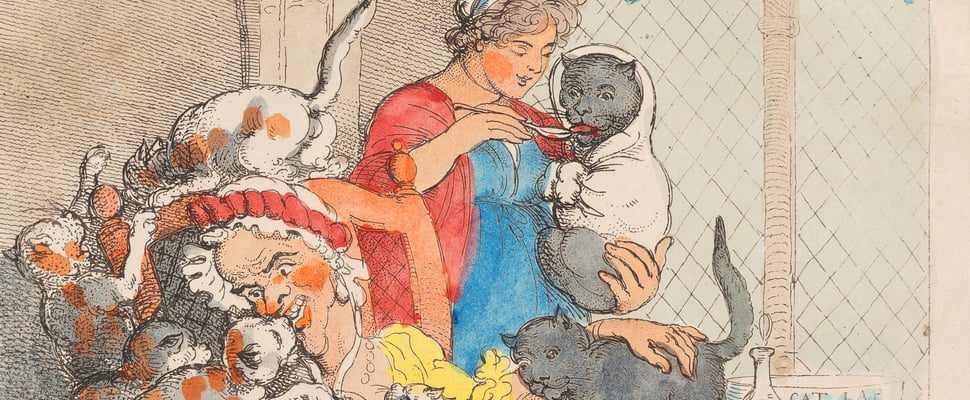
For thousands of years, humans have looked at a creature capable of lethal hunting precision and thought, “This is so cute, I must speak to this thing like a baby."
Today, the ‘cat parent’ phenomenon is a cornerstone of internet culture, firmly cemented in memes, YouTube videos, and TikToks alike, but the impulse to treat cats like babies isn't a modern, millennial, or Gen-Z quirk of the digital age. It’s a complex intersection of evolutionary biology, neurological hijacking, and ancient cultural significance.
To understand why we treat cats like babies, we have to look at how they have physically and behaviourally evolved to ‘hack’ the human brain.
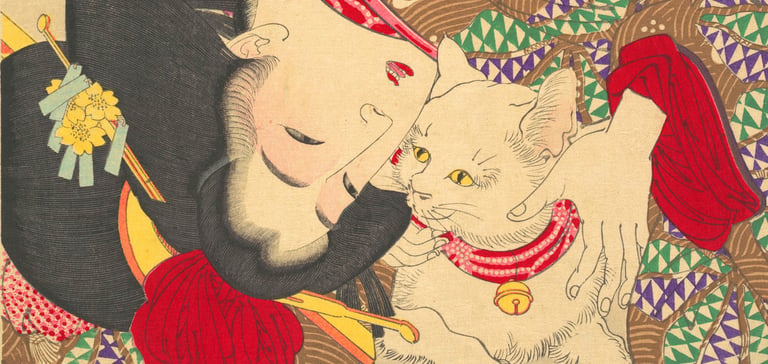
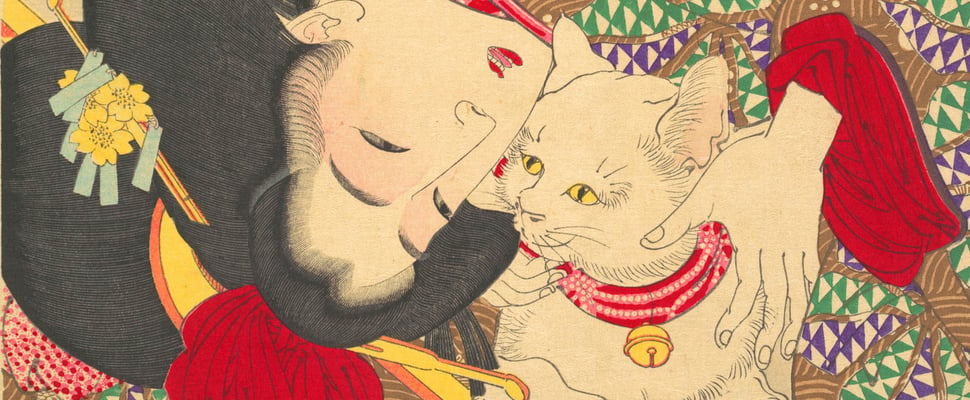
The baby schema and human biology
The most fundamental reason we treat cats like infants is a concept known as Kindchenschema (baby schema), first identified by ethologist Konrad Lorenz.
This refers to a set of physical characteristics that humans are evolutionarily programmed to find ‘cute and ‘protectable’.
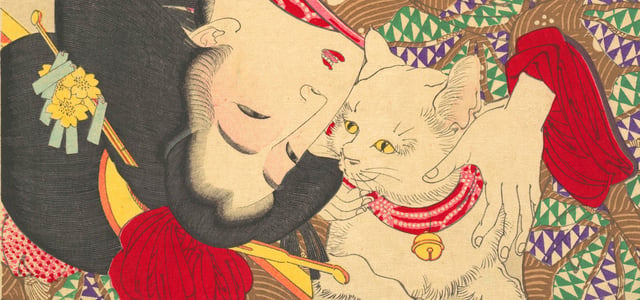
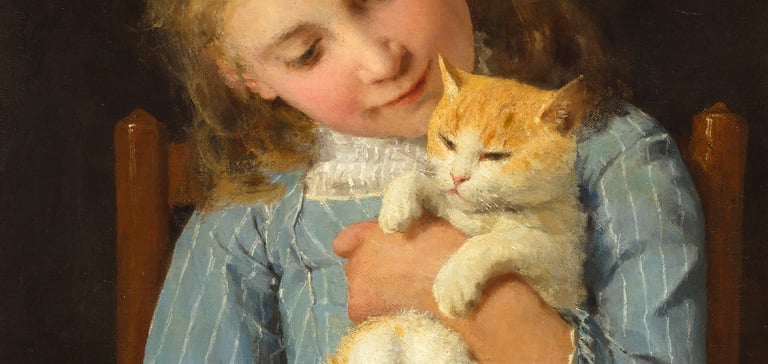
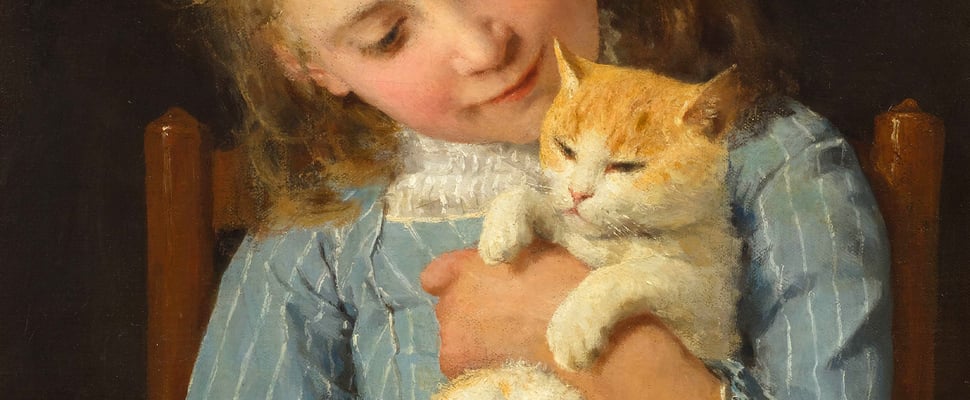
Human babies have large eyes, high foreheads, and small noses. Cats share these exact proportions, so it’s a no-brainer why we want to swaddle them and treat them like our own.
In talking to a friend about the basis of this article, she jokingly told me, “I feel like I birthed my cat. She’s my heart outside of my body. My soul.” Whilst this sounds like a dramatic quote from a novel like Wuthering Heights or Jane Eyre, they’re the words of a modern cat mum, truly and utterly besotted with her feline companion.
Scientifically, there’s a lot that happens when we look at a cat. One look and our brains release oxytocin, the same hormone that facilitates bonding between a mother and her newborn. This chemical surge triggers an instinctive nurturing response, making us want to hold, protect, and provide for the cat.
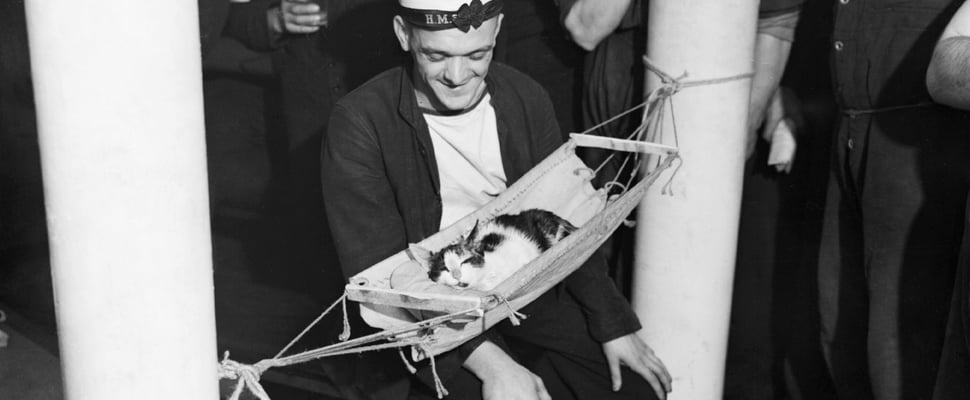
The average domestic cat is roughly the same weight and size as a human newborn (3–5 kg). This makes them ‘arm-portable’, fitting perfectly into the crook of a human elbow or on a lap, reinforcing the physical sensation of holding an infant, something that sets our brains alight.
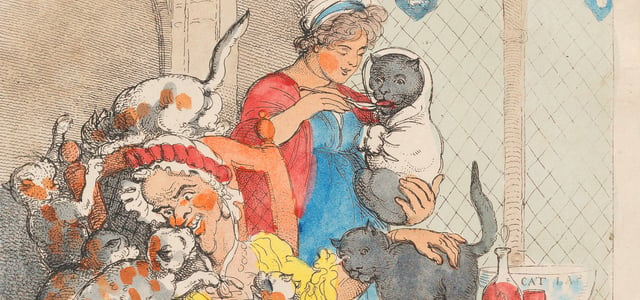
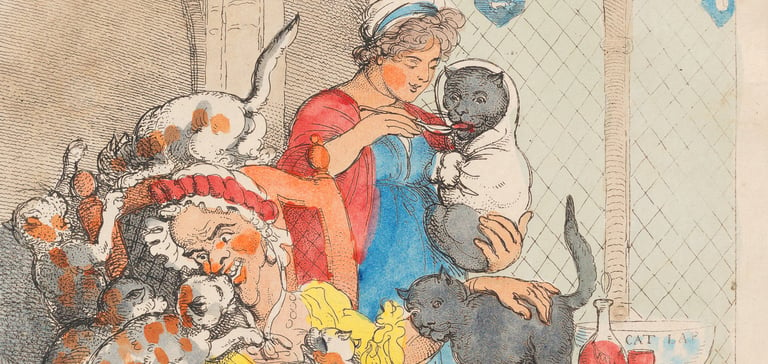
The power of a meow
While physical appearance starts the bond, it is the cat’s vocalisation that seals it. Interestingly, adult cats in the wild rarely meow to one another; they use body language and scent cues instead. The domestic ‘meow’ is a language developed almost exclusively for humans.
Research has shown that cats have evolved a specific type of vocalisation called the solicitation purr. This purr contains a high-pitched frequency that mimics a human infant's cry. Because humans are biologically wired to be distressed by a baby’s cry, we find it nearly impossible to ignore a cat’s constant meow. We perceive it as a plea rather than a demand, leading us to respond with food, attention, or comfort just as a parent would for a child. And who doesn’t want to give a crying cat lots of love and cuddles?
From gods to guardians
The babying of cats is far from a modern, Western invention: we can actually trace it back to the earliest civilisations, most notably Ancient Egypt.
In Egypt, cats were not just pets; they were vessels for the divine. However, their treatment mirrored what we would now call ‘extreme pampering’.
Luxury living: Egyptian cats were often adorned with gold jewellery and fed high-quality fish directly from their owners' plates.
Grief and ritual: If a cat died, the household would enter a period of deep mourning. The Greek historian Herodotus noted that family members would shave their eyebrows as a public display of grief for their lost feline companion.
Mummification: Thousands of cats were mummified with the same care given to royalty, often buried with bowls of milk or mice to ensure they were cared for in the afterlife.
This historical precedent shifted the cat’s status from a pest-control animal to a family member and protected infant, aka a little angel baby.
The role of domesticity
Domestication itself is a process that keeps animals in a state of permanent adolescence. The official, scientific term for this is neoteny.
In the wild, a kitten stops kneading (massaging with paws, also known as making biscuits) and purring for their mother once they are weaned. However, domestic cats continue these behaviours throughout their entire lives. When your cat kneads your lap, they’re treating you as their mother; when you respond by petting them and speaking softly, you’re accepting the role of mum.
This mutual infantilism creates a feedback loop. Because they act like babies, we treat them like babies; because we treat them like babies, they continue to act like babies to get what they need (though we’d say there’s absolutely nothing wrong with this).
The psychological benefit and the surrogate effect
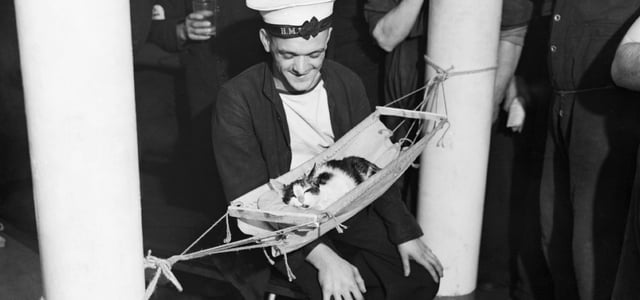
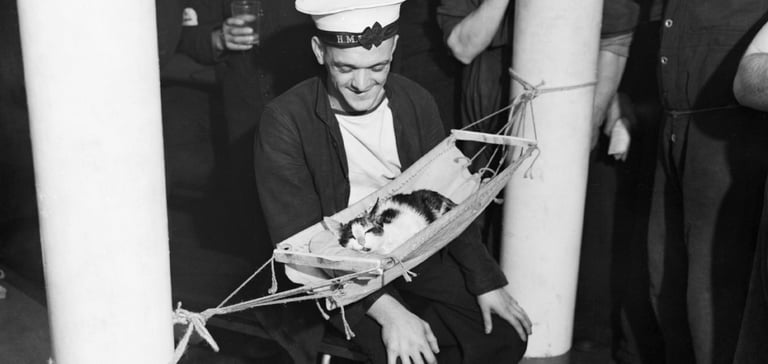
In the modern era, the ‘fur baby’ phenomenon has grown as human social structures have shifted. With people marrying later and living in more urbanised, isolated environments, cats often fill the role of a surrogate dependent.
Unlike human children, who eventually grow up and leave, cats remain dependent for their entire lives. This provides a consistent sense of being ‘needed’ without the complexities of human social dynamics.
Treating a cat like a baby then allows us humans to express our nurturing instincts with fewer of the financial or emotional stresses associated with raising a human child.
Conclusion
We treat cats like babies because, when it comes down to it, they are the only animals on Earth that have successfully ‘hacked’ our parental software. Through a combination of their cute faces, their baby-cry vocalisations, and their babyface behaviours, they have convinced one of the most dominant species on the planet to serve their every whim - and we wouldn’t have it any other way.
In reality, we haven't just ‘tamed’ cats; we’ve adopted a species that has evolved to be the ultimate baby, even if we don’t consider ourselves particularly maternal or paternal towards human children. And as long as our brains continue to release oxytocin at the sight of a pair of big eyes and a twitching nose, whether you like the term or not, the ‘fur baby’ isn't going anywhere.

From everyday questions to expert advice, we’ll help you feel confident in every moment of pet parenthood.
Less stress, more love.
Along with our excellent coverage, we offer access to a 24/7 online vet to answer all your sticky questions.