Summary
Index
Introduction
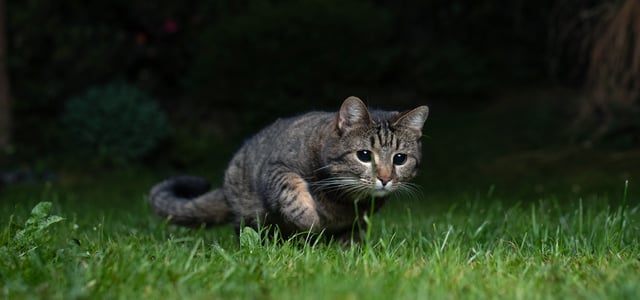
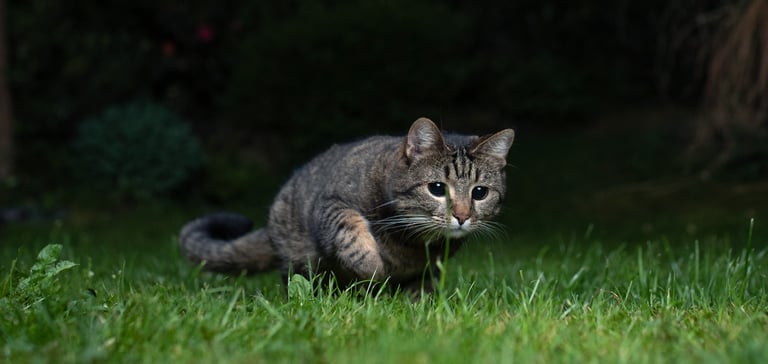
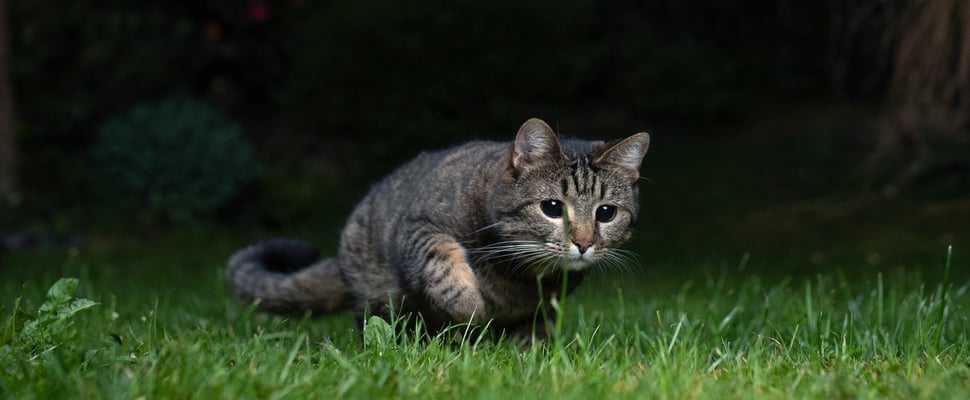
Yes, cats see in the dark impressively well, but they cannot “see” in pitch black. In complete darkness, a cat's night vision is not as effective because their "night" vision works only when there's at least some level of light (even a tiny bit).
Key takeaways
Night vision isn’t magic: in true blackness your cat won’t be able to see.
Cats are built to see better in low-light conditions, largely due to their pupil shape and lots of rod cells.
A special reflective layer called the tapetum lucidum helps by sending light back to the retina.
Your cat is not truly nocturnal. They are crepuscular, meaning they’re often active at dawn and dusk.
Cats spot movement well and have strong side awareness, thanks to enhanced peripheral vision.
Can cats see in total darkness?
In most homes, it’s never completely dark. There’s usually a hallway glow, a TV standby light, or streetlight spillover.
With a small light available , it can be enough for many cats to move around confidently, even in the nighttime quiet.
Cats Protection expands on this, noting that cats do not have true night vision, but they can see far better than people in dim settings, and their eyes are designed to use the amount of light that’s there (Cats Protection).
How your cat’s eyes make dim light feel brighter
A cat’s pupil can open wide so more light can enter. That helps them see in low light.
In bright light, that same opening shrinks down to protect the eye. It’s one reason cats can perfectly handle changing lighting across different times of day.
Rods and cones: the trade-off
Eyes are amazing wonders of nature, which work using a system commonly referred to as rods and cones.
The cone cells are more about fine detail and colour vision, and cats have fewer cones, so they may struggle to see rich colours the way we do.
(If you want a deeper look at that, see this guide on whether cats see colour.)
However, cats are great at picking up movement and have a wider view than we do. This is what helps them see better than humans in dim rooms, even though they might not see as well as you for tiny, colourful details in daylight.
The tapetum: the reason eyes “glow”
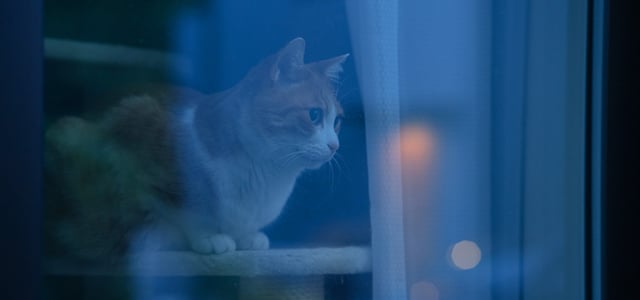
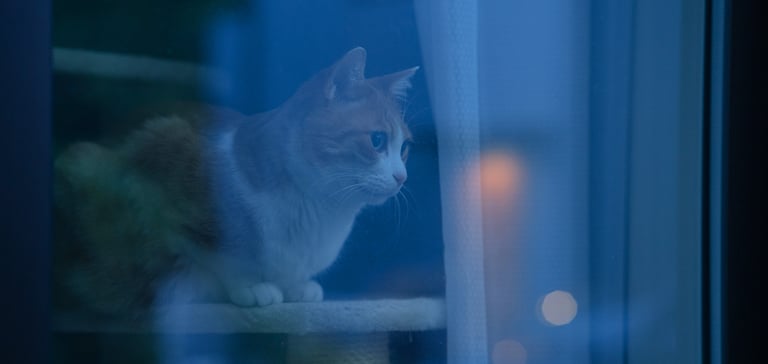
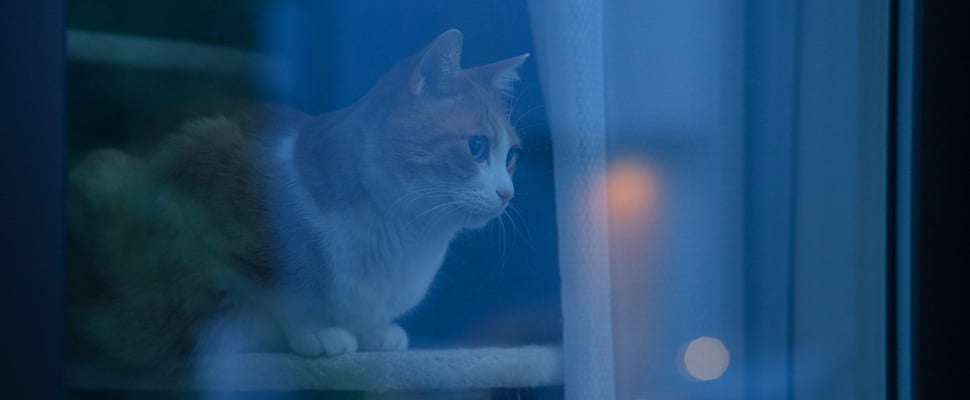
Cats have a tapetum (the tapetum lucidum) sitting behind the retina. Think of it like a mirror. When light enters the eye, this layer reflects light and can send it back for a second pass, which reflects light back through the sensing cells.
The tapetum increases sensitivity by reflecting light back to the retina, giving photoreceptors another chance to pick up scarce light (AskNature).
Why it looks spooky in photos
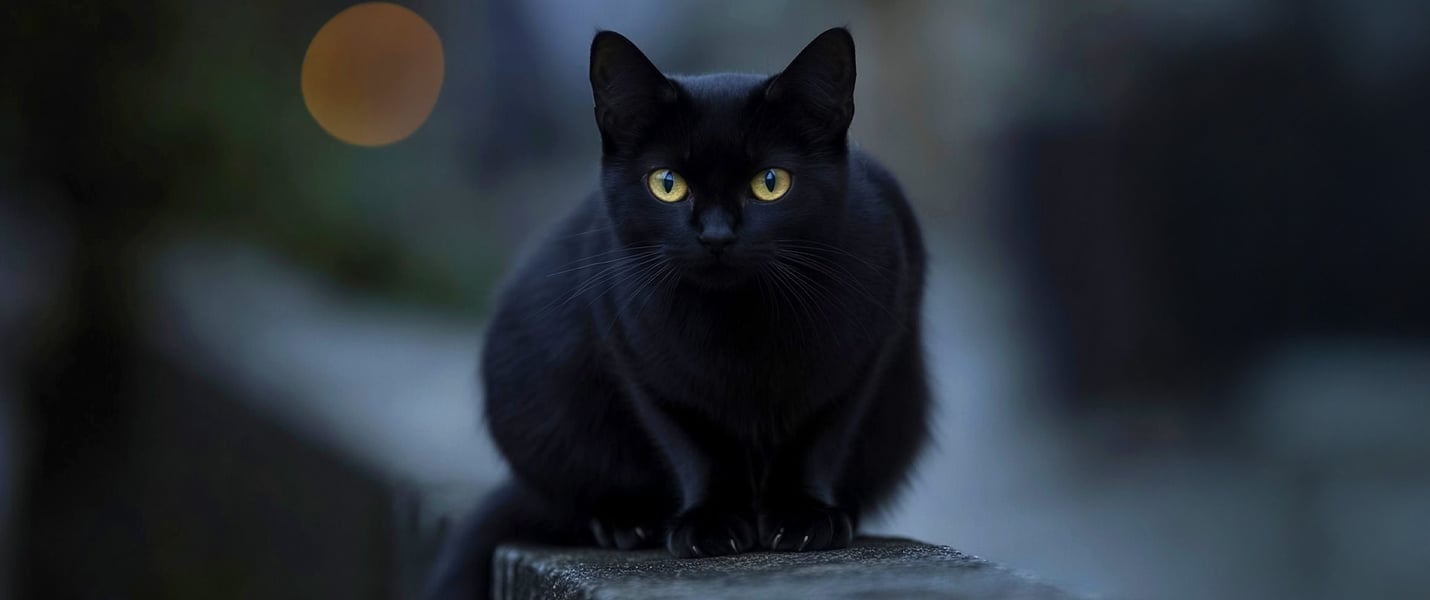
That shine is real. Carnegie Museum of Natural History also explains the tapetum, which acts like a mirror, so some light bounces back out and we see “eyeshine” (Carnegie Museum of Natural History). This can look like a cool effect but is less cute when you meet it in the hallway at 2am.
Nocturnal or crepuscular
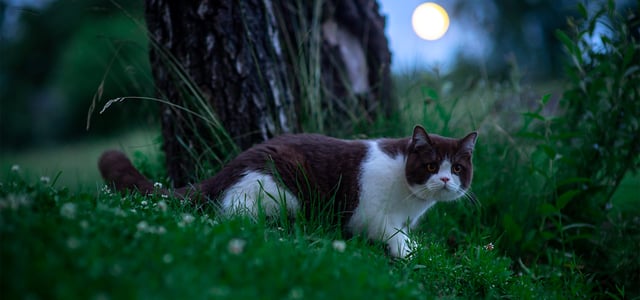
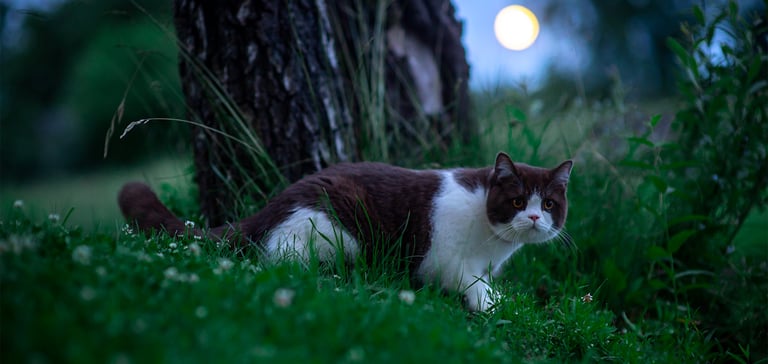
Many people assume cats are nocturnal, but domestic cats are actually crepuscular. That means they’re often active at dawn and dusk, when prey animals historically moved too.
So if your cat is bouncing off the sofa at silly o’clock, it’s not “broken”. It’s just being a natural feline with an ancient timetable.
Why the zoomies happen at night
Your cat’s ability to see in dim light plus boredom can make evenings lively. If you’re seeing a lot of late-night chaos, this piece about the signs your cat might be bored can help you spot the pattern and fix it.
And yes, cats use that energy to knock one single pen off the desk with perfect accuracy, even in dim light.
Colours and perception
Because their colour system differs, many cats see more muted tones, often leaning into shades of blue and greens rather than reds.
If you’ve ever thought cats see the world like a little predator film, you’re not far off.
Cats are masters of movement perception, detecting rapid motions up to 10 times better than humans. This allows them to track the smallest twitch of a mouse tail or a fluttering insect that we might miss entirely.
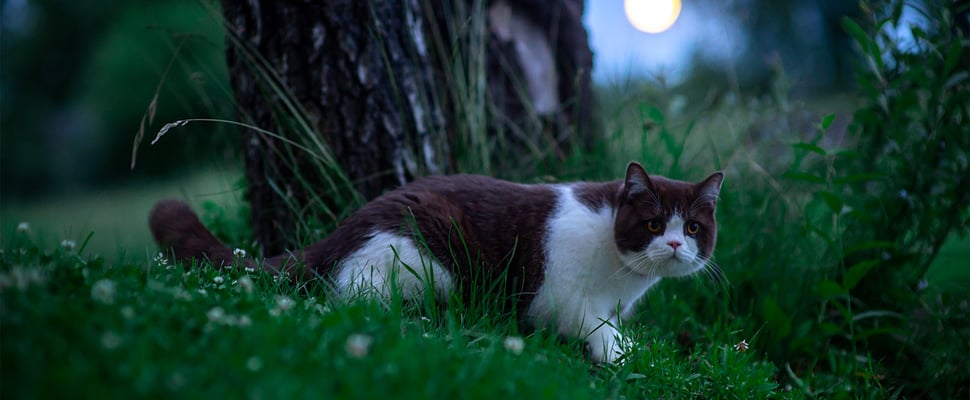
Practical tips to help your cat at night
Cats need a bit of light, not a stadium floodlight. If you want to help:
Keep a small landing light on, or use a low-watt night light, so they have the right amount of light available to move safely.
Avoid suddenly switching on harsh lights when your cat is mid-jump. It can be disorienting.
If you want to read more on cat's quirky behaviour, see our piece about why cats like boxes.
Remember they use more than eyesight
Even though cats rely on vision, cats use whiskers, hearing, memory, and scent to map the room. Although cats still do better when furniture stays in familiar places.
Wrapping up
Cats can see fine at night, but not with complete darkness. You should provide gentle, steady lighting and clear pathways.
Most importantly, don’t worry if your cat acts spooky at night. Their natural instincts are much more heightened than us humans.
And if your cat is staring into a dark corner again, we’re not saying it’s ghosts. But we’re also not saying it isn’t.

From everyday questions to expert advice, we’ll help you feel confident in every moment of pet parenthood.
Less stress, more love.
Along with our excellent coverage, we offer access to a 24/7 online vet to answer all your sticky questions.