


Summary
Index
Introduction
Bringing home a rescue animal is one of the most rewarding experiences a pet owner can have. However, the reality doesn’t always look like an immediate cuddle on the sofa, zoomies after dinner or playing with toy mice.
For many rescue cats, the transition from a shelter or the street to a domestic home is an overwhelming sensory shift that requires time and an abundance of patience.
If your new companion spends their first few days, or even weeks, hidden away, it’s not a reflection of your home, your personality or your pet ownership style. It’s simply a cat being…well, a cat. At Waggel, we believe that understanding the feline psyche is the first step toward a lifelong bond.
This article is our go-to guide to help your shy rescue cat find their footing and, eventually, their confidence.


Create a ‘safe space’ sanctuary
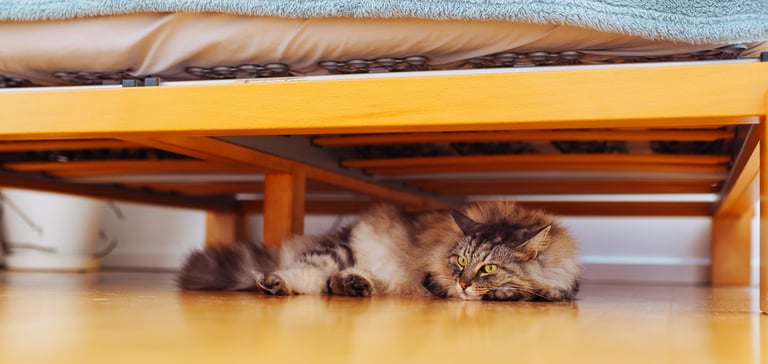
One of the biggest mistakes many new owners make is giving a nervous cat free rein of the entire house immediately. We get it, you want your cat to feel comfortable and to know that your house is their house. However, to a cat, this often feels incredibly vulnerable and open spaces become incredibly intimidating.
Start small: Give your cat one quiet room to explore. This ‘safe space’ should contain everything they need: food, water, a litter tray, and a variety of hiding spots.
The power of hiding: Hiding is a vital coping mechanism for cats. Ensure they have ‘covered’ options, like a cat tunnel or a cardboard box with a blanket inside.
Respect the boundary: Never reach into a hiding spot to pull your cat out. This is their one place of absolute safety; if that is violated, their stress levels will spike, and it’ll take them a lot longer to become comfortable with you.



The art of low-intensity interaction
When we love something, our instinct is to move toward it, look at it, and touch it. When this thing is a cat, we want to touch it even more because it’s cute and looks cuddly. But to a shy cat, this ‘forward’ behaviour is a predator’s trait and a big no-no. To win them over, you need to master the art of being non-threatening and nonchalant.
1. The parallel existence technique
Spend time in their safe room without acknowledging them. Sit on the floor, answer emails, read a book, doomscroll. By purposefully ignoring your cat, you are demonstrating that you are not a threat and that you have no demands of them.
2. The slow blink
In the feline world, sustained eye contact is a challenge. If you do happen to make eye contact with your cat, perform a slow blink. Slowly close your eyes, hold them shut for a second, and look away. This is the universal sign for ‘I am relaxed, and I mean you no harm.’
3. Keep your voice low
Cats have incredibly sensitive hearing. Sudden loud noises or high-pitched ‘baby talk’ can be startling, although it can feel irresistible. Speak to them in a calm, low, rhythmic tone to help them habituate to your voice.



The magic of positive reinforcement
Confidence is built through positive associations. You want your cat to associate your presence with the best things in life: food and the ‘thrill of the hunt’.
High-value rewards: Use lickable treats or small pieces of plain cooked chicken. If they won't come near you, toss the treat gently toward them and look away. Slowly decrease the distance over several days.
Wand toys: These are essential for shy cats because they allow for play at a distance. When a cat engages in play, they move from a prey mindset into a predator mindset. Successfully ‘catching’ a feather toy or fabric mouse provides a massive boost to their self-esteem.



Decoding feline body language
Contrary to what most of us grew up being told, a shy cat won't always hiss to tell you they're uncomfortable; their signals are often much quieter. Learning to read these subtle cues is the secret to building trust and can prevent major setbacks in your relationship. While we often wait for a growl or a swipe to back off, your cat is usually talking to you long before that happens.
For instance, if you notice your cat’s pupils are dilated, they are likely feeling overstimulated or fearful; the best move here is to give them immediate space to decompress. Similarly, a twitching tail tip acts like a flickering yellow light, signalling growing annoyance or anxiety. When you see that movement, it’s time to stop the current interaction before it escalates and try again another time.
Physical boundaries are equally important. If your cat is leaning away from your hand, they are clearly saying, "I'm not ready for this touch". Respect their autonomy and boundaries by withdrawing your hand and allowing them to come to you when they feel safe. On the flip side, when a cat is rubbing their cheeks on you, they are marking you as a safe person. This is a big deal and a huge compliment. Be careful not to overreact, though, as this can push them away just as they begin to feel safe.



Environmental help
Sometimes, nature needs a little nudge. There are several tools you can use to lower the ambient stress in your home:
Feliway diffusers: These release synthetic pheromones that mimic the ‘happy markers’ cats leave when they feel secure.
Vertical space: Cats feel safer when they are high up. Adding a cat tree or a secure shelf allows them to survey the room without feeling ‘trapped’ on the floor.
Predictability: Cats thrive on routine. Feeding them at the exact same times every day helps lower their cortisol levels because their world becomes predictable – something they may not have experienced for a long time.



When to speak to a professional
Building confidence in any rescue animal is a marathon, not a sprint. However, if your cat isn't eating, isn't using the litter tray, or remains in a state of ‘shut down’ after several weeks, it’s worth a trip to the vet, as they can help to determine if there are any underlying conditions.
Pain or underlying illness can often manifest as extreme shyness. Having a comprehensive pet insurance policy, like the ones we offer here at Waggel, ensures you can address these behavioural hurdles with a vet or a certified behaviourist without the added stress of unexpected costs.



To conclude
We know it might sound obvious, but it’s important not to forget that every rescue cat has a history - some of which you may never know. Progress isn't always a straight line; there will be days when they retreat, and days when they take a brave step forward.
The moment a shy cat finally chooses to sit next to you on the sofa isn't just a win, it’s a profound vote of confidence and their way of saying ‘you’re my human’. By giving them the time and space they need, you aren't just giving them a home; you're giving them their life back.

From everyday questions to expert advice, we’ll help you feel confident in every moment of pet parenthood.
Less stress, more love.
Along with our excellent coverage, we offer access to a 24/7 online vet to answer all your sticky questions.