Summary
Index
Introduction
If you are choosing between a Bengal and a Savannah, the biggest difference is this: Savannah cats tend to be taller and heavier, and their behaviour can be less predictable in early generations.
Bengal cats are usually smaller, but still very busy, vocal, and athletic. Let’s unpack what that looks like in real homes.
Key takeaways
Savannah cats and Bengal cats are both hybrids, but they come from different wild ancestors, which affects size and behaviour.
Size varies a lot by sex and generation, especially with Savannahs, where F1 and F2 are often much bigger.
Both need daily interaction, training, and a home set up for climbing and problem solving.
Welfare matters: UK guidance highlights concerns with hybrid breeding and keeping, especially in earlier generations.
For many homes, later generations are the safer choice, with clearer routines and fewer surprises.
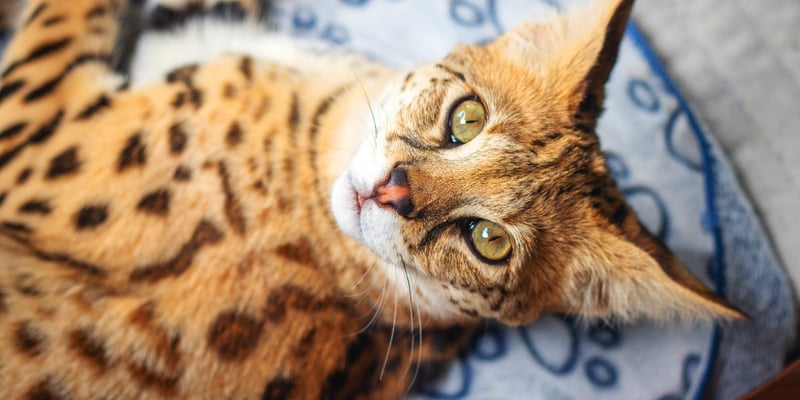
What are these two breeds, really?
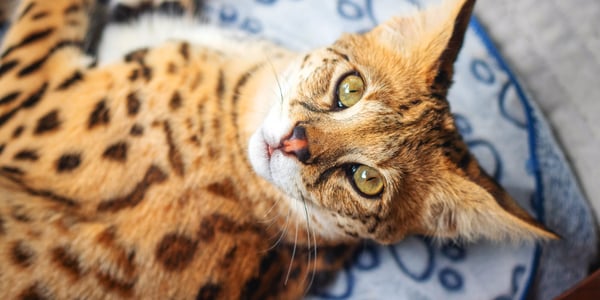
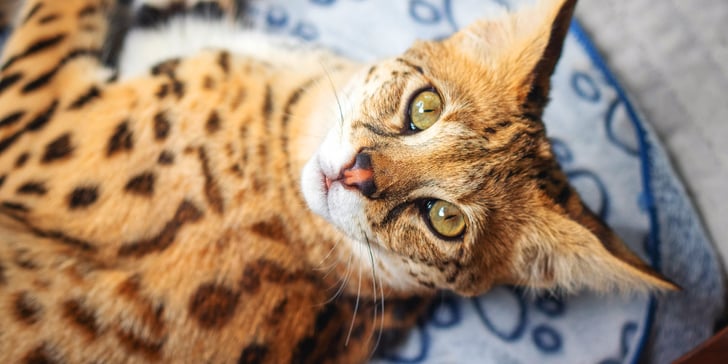
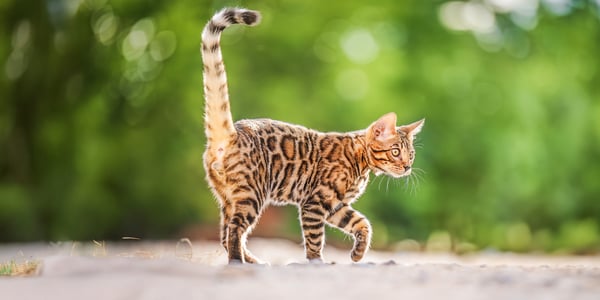
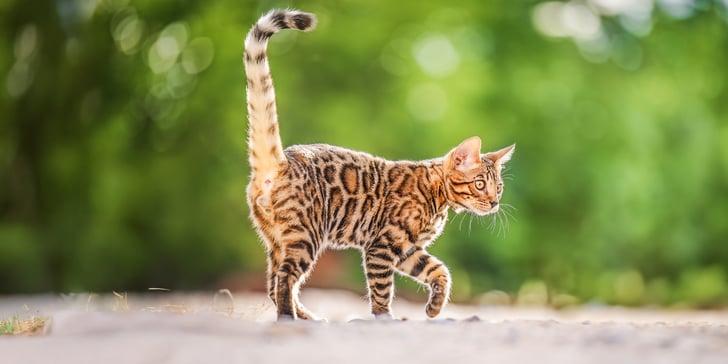
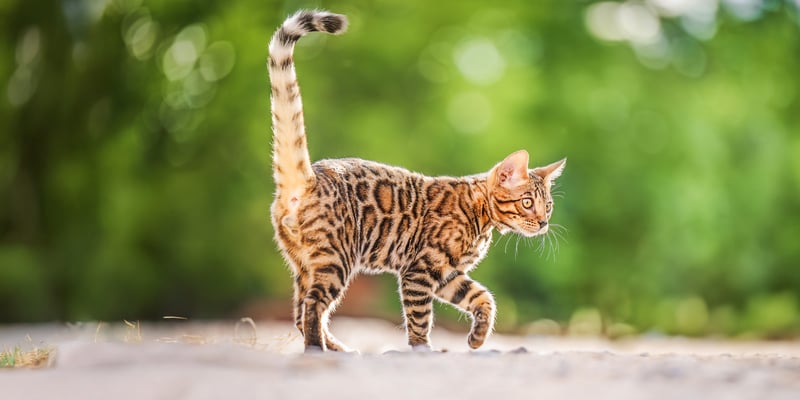
The Bengal cat was developed by crossing a domestic cat with the Asian Leopard cat.
That “wild look” in a family package was the aim, but it can come with extra drive and intensity compared with many other domestic cat breeds.
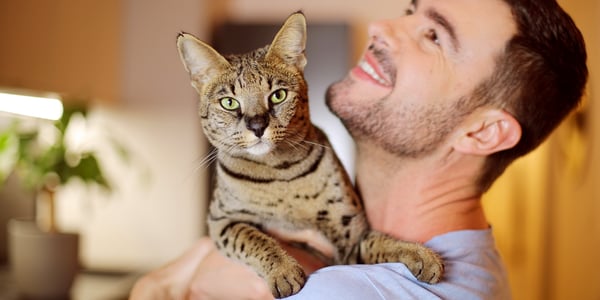
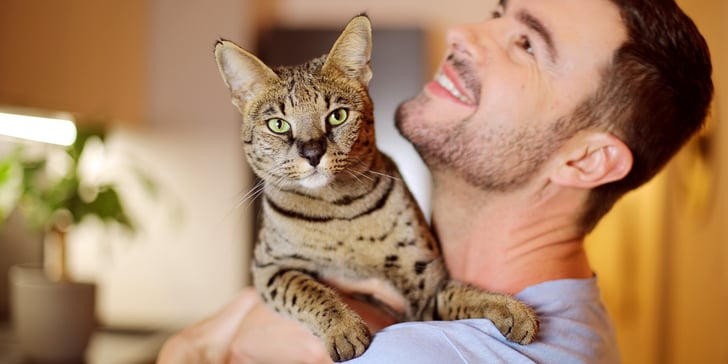
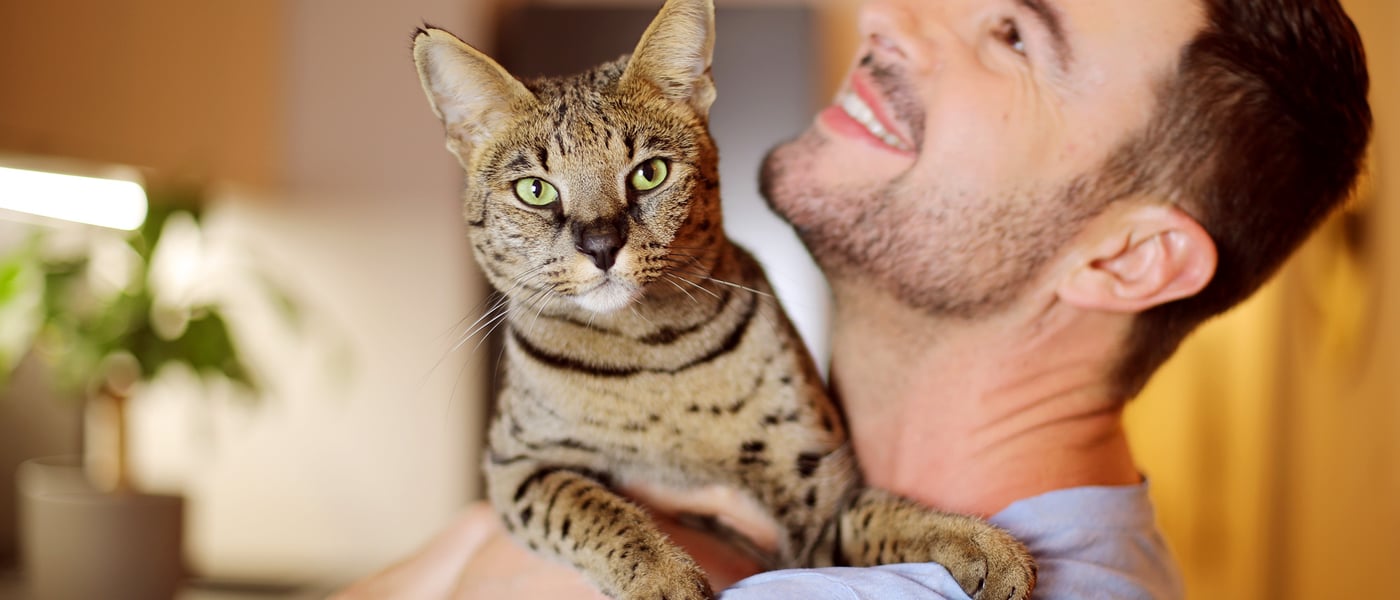
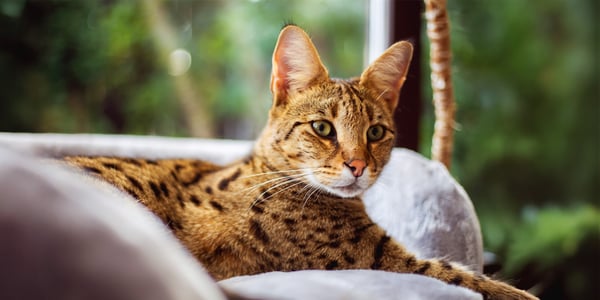
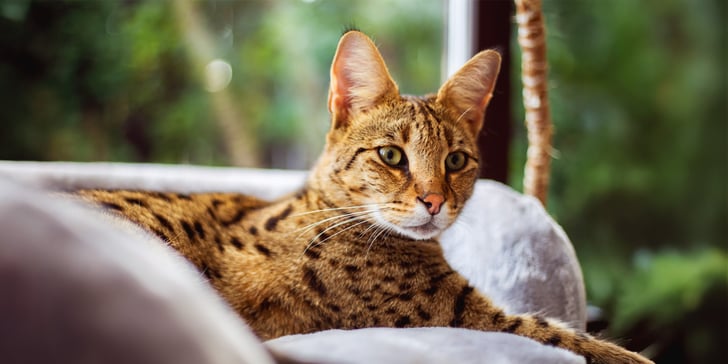
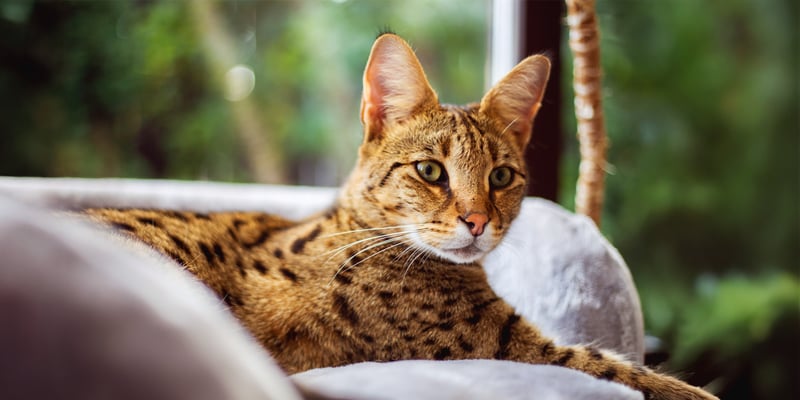
The Savannah cat was developed by crossing a domestic cat with a Serval. That ancestry is a big reason many Savannahs look long-legged and beautifully graceful, and why some owners describe them as more “full-on” around the house.
Both are classed as hybrid types, and UK welfare organisations flag that hybrids can be challenging to keep well in a normal household.
Blue Cross, for example, shares clear advice on health and behaviour considerations for hybrid cats here: Blue Cross.
Bengal vs Savannah size: height, weight, and “presence”
Real-world size depends on genetics, sex, diet, and activity. But broad ranges used by veterinary and breed resources show a pattern: Savannahs often run larger.
Expect variation. A big Bengal exists. A smaller Savannah exists. (Cats love proving us wrong.)
Why Savannah size varies more
Savannahs are often discussed by generation because “how close to the Serval they are” matters.
F1 means one parent is a Serval, so the result can be much larger and more intense. F2 is one more step removed, often still big.
By later generations like F5, many cats are more consistent as family pets.
A simple explainer of these generations is laid out by the Savannah Cat Association.
Pros and cons of larger size (the part people skip)
A bigger body can be lovely. It can also mean:
more strength behind jumps
more impact if your cat launches off your chest when you fall asleep
more food costs (they like to eat)
more risk to breakables if you do not set up your home for vertical space
This is where being honest about your space matters. A tall hybrid can turn a “safe shelf” into a runway.
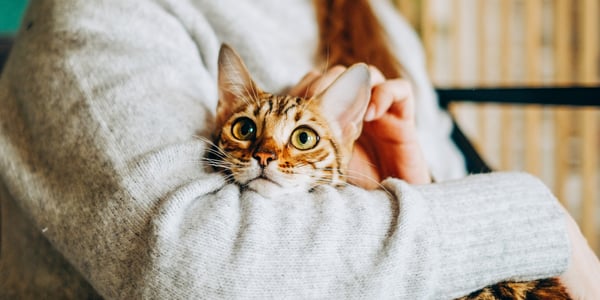
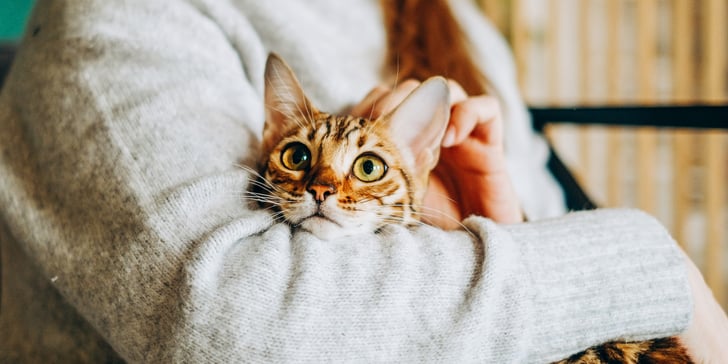
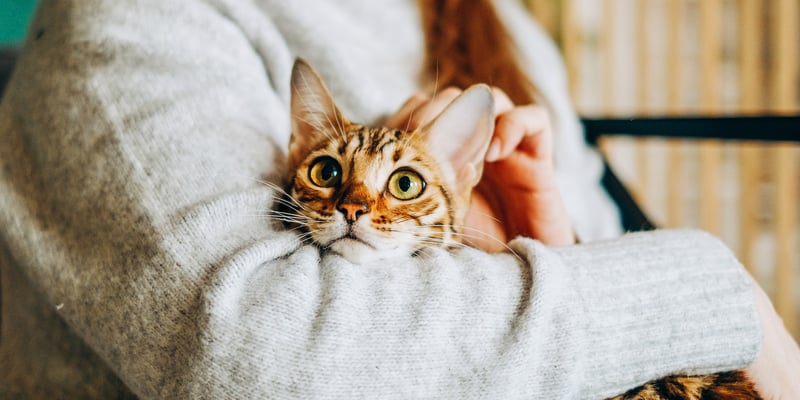
Temperament: energy, sociability
Both can be affectionate with their people. Many owners report a strong bond and lots of interaction.
But “friendly” does not always mean “easy”.
Blue Cross warns that hybrids can have strong prey drive, high activity needs, and may show frustration behaviours if their environment is not right, especially if kept indoors without enough enrichment: Blue Cross.
Bengal temperament: busy, chatty, and clever
Bengals are often described as:
Playful
Highly curious
Talkative
Athletic and persistent
They are frequently labelled among the more intelligent cats, and sometimes in the way that makes you say, “How did you open that cupboard?” and then buy child locks to protect your snacks.
A key thing: cats are curious, but Bengals can be curious with extra commitment. This is because they tend to want stimulation and routine, and they do best when you plan structured playtime rather than hoping they entertain themselves quietly.
That said, this breed can be brilliant for the right home. But, if you want a lap-only cuddle companion, you may feel rejected when your Bengal chooses the top of the wardrobe instead.
Savannah temperament: bold, athletic, sometimes dog-like
Savannahs are commonly described as:
Outgoing with their humans (some are reserved with strangers)
Very athletic and keen on jumping
Sometimes dog-like in following you around and learning routines
The Animal Welfare Committee’s report discusses welfare and behavioural challenges linked to hybrids, including risks to wildlife and difficulties meeting behavioural needs: GOV.UK.
You can also reference the broader policy page as a UK government review on cat breeding welfare implications: GOV.UK.
Care needs: what you will need to do every day
For both Bengal and Savannah cats, assume you will need to enrich their environment, not just buy a toy mouse and hope they don't get bored.
Here is what tends to make the biggest difference:
Tall cat trees and wall shelves (think proper climbing structures)
Puzzle feeders and hunting-style games to match their instinct
A safe routine for exercise, play, and rest
Clear boundaries (because an impulsive jumper will test them)
If you have neighbours close by, keeping them indoors or using a secure catio may be safer, especially with their stronger prey drive concerns.
Socialisation and early life
With hybrids, socialisation is not a nice-to-have. It is part of the job.
Early handling, gentle exposure to normal household sounds, and reward-based training can shape adult behaviour.
This matters even more for early generations, where behaviour may be less predictable.
If you are buying a kitten, ask exactly what the breeder has done before you ever visit. Ask about generations, parental temperament and health, and remember documented proof beats promises.
Pros and cons: a clear-eyed look
Bengal pros and cons
Pros
Striking, exotic-looking appearance with a unique coat
Interactive and engaging personality
Often very people-focused
Cons
Can be intense and demanding, especially if bored
May vocalise a lot
Needs daily activity and mental challenges
Savannah pros and cons
Pros
Tall, athletic look, often very “wow factor”
Can be highly interactive and trainable
Strong bond potential with owners
Cons
Size and strength can be a lot in a small home
Early gen cats can be harder to meet welfare needs for
May need more management, space, and containment
Choosing between the two
Ask yourself these 5 questions
Do I want a social, busy cat who needs a schedule, not a “low effort” pet?
Can I provide daily structured play and training?
Am I prepared to cat-proof the home properly?
Am I comfortable with the ethical side of hybrid breeding, and committed to welfare-first choices?
Am I choosing later generations, with predictable handling and care?
If you are still deciding, it can also help to look at other options, including well-established breeds that may fit your home with fewer welfare concerns. For ideas, see Waggel’s guide to rare cat breeds and their overview of common cat breeds in the UK.
Practical costs and protection (because life happens)
Insurance and vet planning
Hybrids and high-energy cats can rack up bills in very normal ways: dental issues, stomach upsets from eating nonsense, injuries from athletic stunts.
If you are budgeting for either of these two breeds, it is sensible to read a UK-focused overview before you commit. Waggel’s cat insurance guide is a helpful starting point.
Final thought: the “right cat” is the one you can meet halfway
Between Savannah vs Bengal, neither is “better”. They are just different.
If you want a high engagement companion and you enjoy training, building routines, and making your home a fun gym, you might love them.
If you want a calm sofa buddy who disappears politely when guests arrive, we might gently suggest looking elsewhere. Your shelves will thank you.
You can still have an exotic vibe without going full wild animal energy. And your future self, holding a mug of tea while your cat does parkour, will appreciate that.

From everyday questions to expert advice, we’ll help you feel confident in every moment of pet parenthood.
Less stress, more love.
Along with our excellent coverage, we offer access to a 24/7 online vet to answer all your sticky questions.