Do Maltipoos Shed? Are They Good for Allergy Sufferers?
Index:



Introduction
Short answer, yes, they can, but most people find they drop less hair than many other breeds. The bigger question is allergens, because fur is not the full story, and living comfortably with your dog is what matters.
Key takeaways
A Maltipoo often has a coat that traps loose hair, so you may see less on your sofa but more in the comb.
No dog is completely hypoallergenic, even when a dog has a low-shedding coat
The amount of “mess” depends on coat types, skin health, and your routine at home.
A good plan (home care plus salon visits) can reduce shedding and cut down on tangles.
Choosing the right breeder and doing the right health tests can save you stress later.



So what does “shedding” really look like day to day?
Most Maltipoos do drop some hair, but the pattern is often different from heavy moulting dogs.
You might notice your Maltipoo leaves a few hairs on the sofa and on your clothes, but nothing too heavy or concerning.
However, because this is a cross, there is no one single coat outcome. They are a designer dog, not a Kennel Club-recognised type with a single fixed standard, so there is variation.
But more on this below.
Why some Maltipoos seem to “hardly shed” (and others surprise you)
A Poodle influence can mean hair that keeps growing and is more likely to stay caught in the coat rather than falling straight to the floor.
That can feel like minimal hair loss in the house, but it also means tangles are more likely if you skip care.
On the other side, if the coat leans more Maltese, it may feel softer and can drop more easily.
This is why you will hear totally different stories from Maltipoo owners. One person swears theirs shed very little. Another jokes they shed a lot, but only minutes before guests arrive.
Coat textures you might see (and what they mean for your hoover)
Maltipoos come in a few common textures, often described as curly, wavy, or straighter.
Here’s a simple guide:
A lot of this also comes down to the size of the Poodle parent (a toy or miniature Poodle line can bring different coat density and texture).
Are Maltipoos good for allergies?
Are they “hypoallergenic”?
You will often see the word hypoallergenic attached to Poodle-cross dogs. The honest answer is: it depends on the person, the individual dog, and how you manage your home.
Both PDSA and Anaphylaxis UK explain the key point: allergies are usually triggered by proteins found in dander, saliva, and skin oils, not just fur floating around.
So even if a dog doesn’t shed much fur, allergens can still be present.
Do Maltipoos produce less dander?
Some people find a Poodle-cross easier to live with because the coat may hold onto hair, which can help contain allergen spread. In that sense, some are effectively more manageable and may produce less dander in the environment when cared for well.
But there is no guarantee. Research also suggests “hypoallergenic” labels do not reliably predict allergen levels across breeds. One well-cited study found no evidence to classify breeds as truly hypoallergenic: Vredegoor et al. (2012).
A practical way to test before you commit
If allergies are a big worry, meet the puppy and the parents more than once if possible.
Ask to spend time indoors where the dog normally lives. It is not glamorous, but it is real life.
And yes, take tissues. All allergy sufferers have been there.



Why your Maltipoo might shed more than usual
Normal moulting vs a problem
Dogs lose hair for normal reasons, but excessive shedding can also point to something else.
If you want the “why now?” explanation, this guide on why dogs moult breaks down seasonal and lifestyle triggers clearly.
Skin, diet, and health
Coat quality is tied to overall health. Common drivers of coat changes include parasites, stress, poor diet, and underlying health conditions.
Good dog food also matters here, especially enough vitamins and minerals and the right fats. If your dog’s coat looks dull, or shedding spikes suddenly, speak to a veterinarian.
Also, overwashing and bathing can backfire and lead to dry skin, which then makes itchiness and flaking worse.
How to reduce shedding (and keep the coat comfy)
The at-home routine that actually works
Think “little and often”.
Use a brush that suits the coat texture.
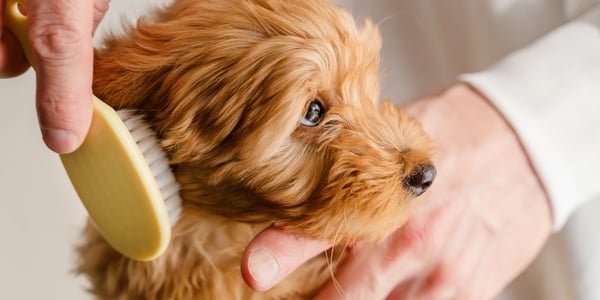
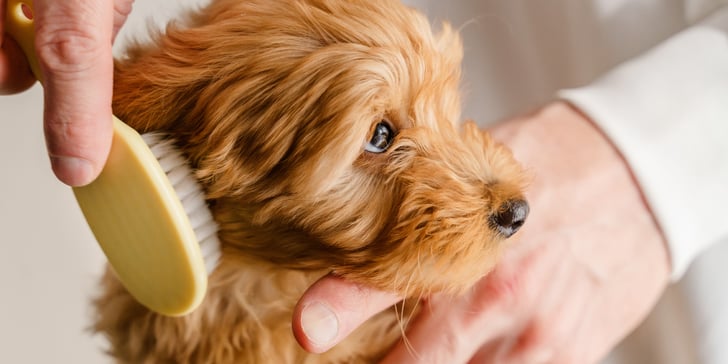
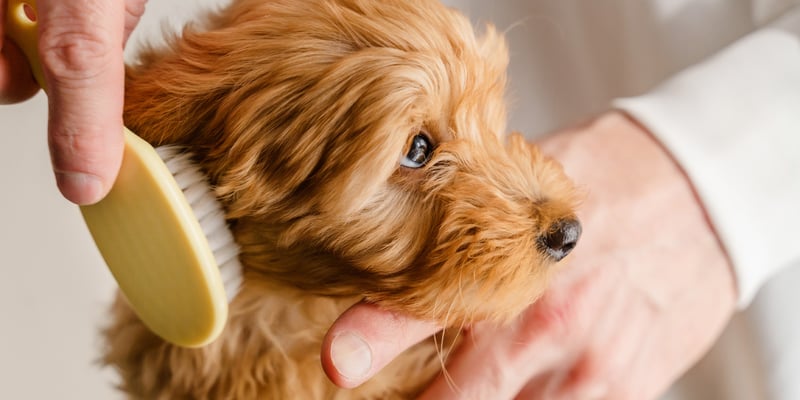
Aim for regular brushing so you can remove loose hair before it mats.
Focus on armpits, behind ears, collar area, and the bum fringe (your future self will thank you).
This is not just about hair on your jumper. It is also how you prevent matting and keep your dog comfortable.
Grooming: how often is “often” in the UK?
For many dogs, a tidy-up works every 6-8 weeks. If your dog keeps a shorter trim or matts easily, you might need to trim every 4-6 weeks.
At-home care plus professional grooming is the sweet spot for many households, especially for a small dog with a fast-tangling coat.
To make it easier long-term, try grooming your Maltipoo by turning the process into a quick weekly habit rather than a big monthly project.
One more thing: when you bathe at home, use a gentle dog shampoo and do not overdo it!
The goal is to keep their coat clean, dry, and knot-free.
That is how you keep your Maltipoo smelling nice, looking cute, and not walking like they are wearing tiny woolly trousers.
It also helps keep your Maltipoo healthy, because matted coats can hide sore spots.
Why a responsible breeder matters (especially for allergies)
Good breeders do more than sell cute pups.
They can talk you through the parents, home environment, and realistic coat outcomes, because Maltipoos are bred with variation.
Before paying a deposit, ask the breeder:
What health screening is done for the parents?
How do previous litters tend to turn out for coat and temperament?
Can you meet mum (and dad if possible)?
This helps reduce avoidable health risks and supports better Maltipoo health long term.
Puppies, coat changes, and the “surprise fluff” phase
A puppy can look one way at 8 weeks and totally different later. Your 8-week-old Maltipoo might look slightly different at 16 weeks, yet this still tells you nothing about adult texture.
Many have a softer puppy coat that changes as they mature. That is why Maltipoo puppies can be hard to predict for hair and allergy households.
Which option is best if you want the least shedding?
If you are comparing similar mixes, this Cavapoo vs Maltipoo guide can help you weigh up coat expectations and temperament.
And if you are browsing other options, this guide to dogs that don’t shed (or shed very little) gives a wider context without the salesy hype.
What about older dogs?
Coats can change with age. Some older Maltipoos develop dryness, thinning, or more tangles, so routines often need adjusting.
If you notice sudden changes in how much they shed, it is worth checking skin, diet, and stress levels or contacting your vet.



Costs and peace of mind
Insurance and ongoing care
Grooming is not optional for many coat types, and vet bills can happen with any pet. However, with some of the care tips we've outlined, you can help spot any skin issues like infections with regular maintenance.
If you are planning ahead, it can help to look at Maltipoo pet insurance so you know what support you want in place.
Final word
A Maltipoo can be a great fit if you want little hair around the house and you are happy to commit to coat care.
They are a popular designer dog for a reason: Maltipoos are often friendly, bright, and funny little companions. Maltipoos are great for many homes.
Maltipoos also tend to bond closely with their people. And yes, of course, they are adorable, which does not help when they are begging for snacks.
Just remember: even with a low-shedding coat, allergies are personal, and the best results come from smart routines, honest expectations, and choosing well at the start.
Waggel Pet Insurance
Need more help? You're in luck if you're a Waggel Pet Insurance member. Along with our excellent coverage, we offer access to a 24/7 online vet to answer all your sticky questions, especially if you need grooming assistance.
Not a member? Why not get a quote now and cover your furry friend for a range of illnesses, all while enjoying our amazing perks and rewards.

Want more like this?
Get updates from us with helpful info, advice, answers to frequently asked questions and much more.
Index:
- Introduction
- So what does “shedding” really look like day to day?
- Are Maltipoos good for allergies?
- Why your Maltipoo might shed more than usual
- How to reduce shedding (and keep the coat comfy)
- Why a responsible breeder matters (especially for allergies)
- Which option is best if you want the least shedding?
- Costs and peace of mind
- Final word
Related posts:






Get your quote
Along with our excellent coverage, we offer access to a 24/7 online vet to answer all your sticky questions.