Summary
Index
Introduction
Probiotics for cats are considered helpful in supporting a healthy gut, especially after mild tummy upsets, food changes, stress, or antibiotic use. They are not a magic fix, and they should never replace vet care, but the right product can make your cat’s digestive life a lot less dramatic.
Cats are masters of pretending everything is fine. Then they leave a suspicious puddle on the carpet at 3am. So, if your cat has loose stools, wind, a sensitive tummy, or occasional sickness, it is worth understanding how probiotics work and which products are actually worth looking at.
Key takeaways
Cat probiotics contain live “friendly” bacteria that may support digestive health and stool quality.
Some products also contain prebiotics, which feed helpful gut bacteria.
The best option depends on whether your cat needs daily support or short-term help after an upset tummy.
Speak to your vet if your cat has vomiting, blood in their poo, weight loss, pain, or diarrhoea lasting over 24 hours.
Product quality matters. Look for clear ingredients, cat-safe dosing, and reputable brands.
What are probiotics for cats?
Probiotics are live microorganisms, usually bacteria or yeasts, given to support the gut microbiome. In plain English, they help top up the “good guys” in your cat’s digestive system.
Veterinary guidance notes that probiotics are used to influence gut bacteria, though the effect can vary by strain, dose, product quality, and the cat’s health problem. Some research on the probiotic strain Enterococcus faecium SF68 found fewer episodes of diarrhoea lasting two or more days in cats and dogs housed in shelters.
That does not mean every product works for every cat. It does mean there is a sensible reason to consider them, especially when your cat’s tummy has been knocked out of rhythm.
When might a cat need probiotics?
Can probiotics help with cat diarrhoea?
They may help with mild, short-term diarrhoea, especially after stress, a diet change, or antibiotic treatment. If your cat has runny poo, our guide to cat diarrhoea explains common causes and when to get help.
PDSA says if a cat has mild diarrhoea for less than 24 hours but is otherwise bright and well, you may monitor them at home. If it continues, gets worse, or comes with vomiting, blood, mucus, lethargy, or pain, contact your vet.
Can probiotics help after vomiting?
Sometimes they can help, but only once the cause is clear. Vomiting can be simple, like eating too fast, or something more serious. If your cat is often sick after eating, throws up white froth, or seems off colour, do not just sprinkle powder on dinner and hope for the best.
Monitor your cat closely after vomiting and contact a vet if they vomit again, seem unwell, cannot keep food or water down, or have symptoms lasting over 24 hours.
Top 5 UK probiotic products for cats
1. Purina Pro Plan FortiFlora Cat
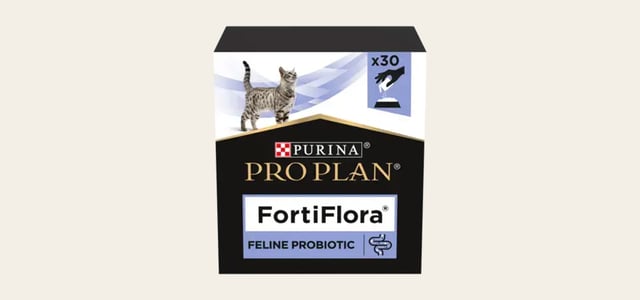
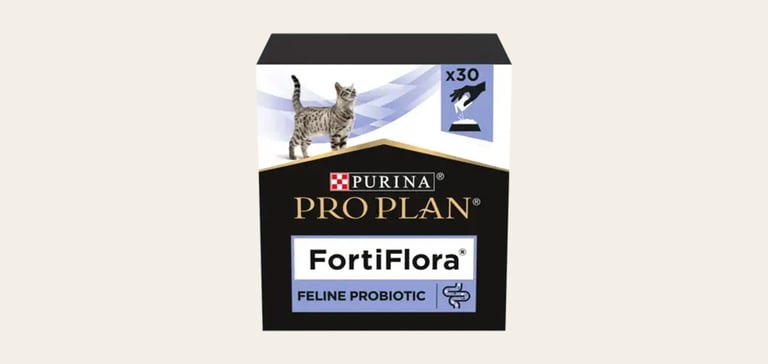
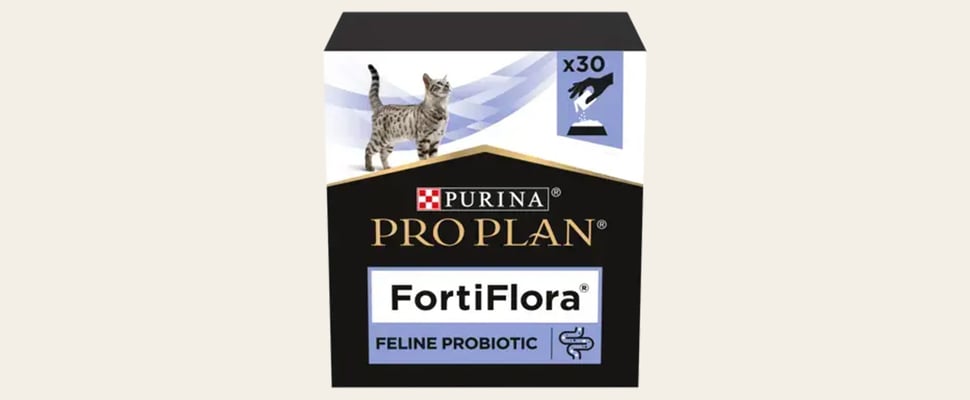
Purina Pro Plan FortiFlora Cat is one of the better-known cat probiotics in the UK. It is made specifically for cats and contains the probiotic Enterococcus faecium SF68. Purina says it supports intestinal health and microflora balance, with a microencapsulated strain designed for stability through the digestive tract.
It is usually given as one sachet sprinkled over food, which helps if your cat treats new things with the deep suspicion of a tiny furry detective.
Best for: cats needing daily gut and stool support.
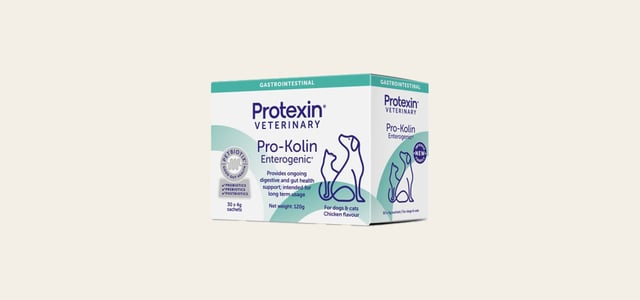
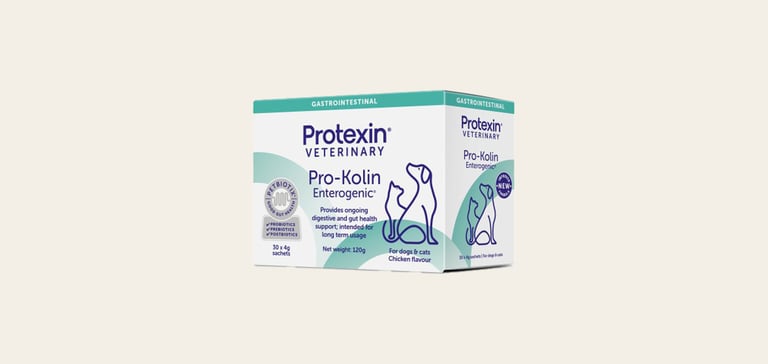
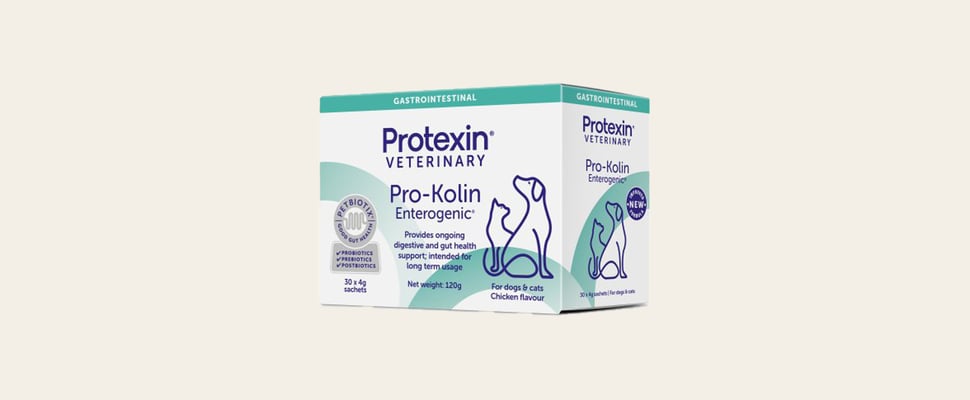
2. Protexin Pro-Kolin Enterogenic
Protexin Pro-Kolin Enterogenic is designed for longer-term gastrointestinal support in cats and dogs. Protexin describes it as a vet-recommended sachet for long-term gut health.
This may suit cats with ongoing sensitive digestion, but ongoing symptoms still need proper checks. If food seems to trigger flare-ups, read our guide to cat food allergy symptoms.
Best for: cats needing steady support over time.
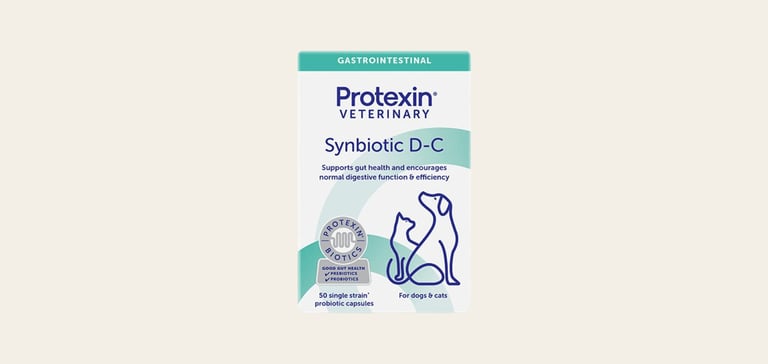
3. Protexin Synbiotic D-C
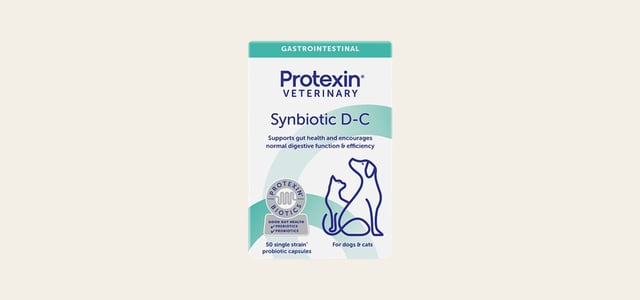
Protexin Synbiotic D-C combines probiotics and prebiotics in capsule form. Protexin describes it as a highly concentrated prebiotic and probiotic capsule for dogs and cats.
The capsule can usually be opened and sprinkled over food, which is handy if your cat refuses tablets with Oscar-worthy offence.
Best for: simple daily support.

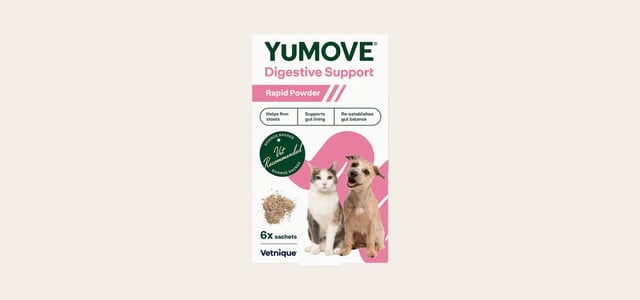
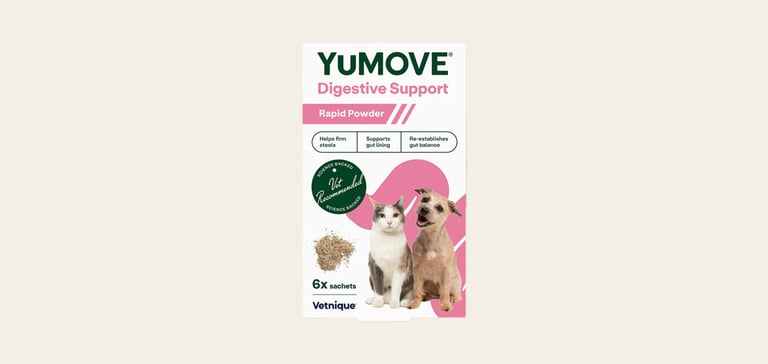
4. YuMOVE Digestive Care PLUS
YuMOVE Digestive Care PLUS is a powder for dogs and cats. YuMOVE says it helps firm poos after a tummy upset, binds bacteria and toxins, tops up good bacteria, and contains its ActivBio prebiotic and probiotic formula.
This is more of a short-term cupboard product than a “my cat has been ill for weeks” product. If symptoms keep coming back, it is time for a vet chat.
Best for: short-term loose stools after a mild tummy upset.

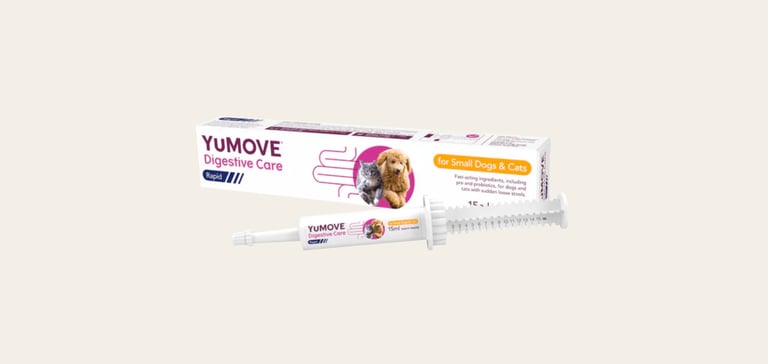
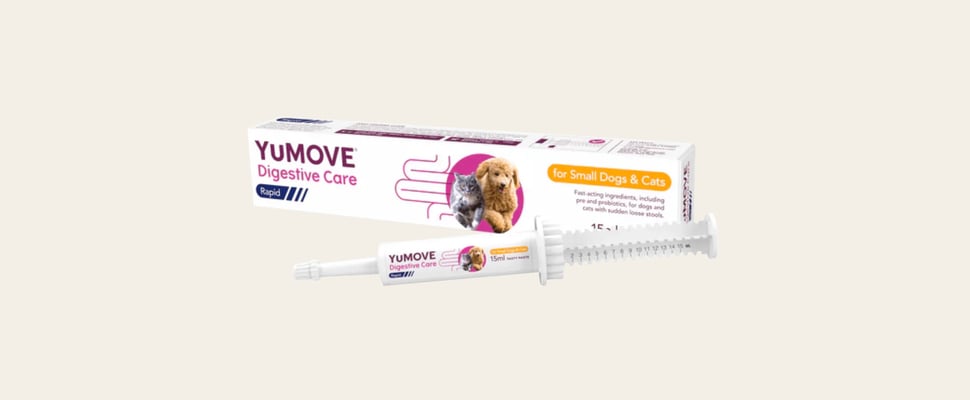
5. YuMOVE Digestive Care Rapid
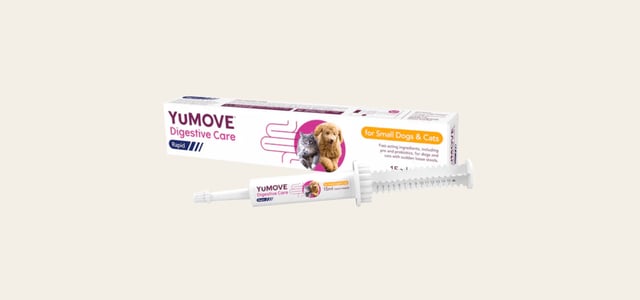
YuMOVE Digestive Care Rapid is a paste option for cats and dogs. PDSA’s product page says it helps firm up poos and supports gut recovery after an upset tummy, with a 15ml size listed for cats and small dogs.
Paste can be easier for some cats than powder. For others, it becomes a wrestling match. You know your cat.
Best for: cats who need an easy-to-feed paste.
How to choose the best probiotic for your cat
Check the strain, not just the slogan
A good product should tell you what it contains. Names like Enterococcus faecium matter because probiotic effects are strain-specific. A vague “contains friendly bacteria” claim is less helpful.
Match the format to your cat
Some cats will eat powder on wet food. Some will detect it from across the room and act betrayed. Sachets, capsules, and paste all have their place.
Think about food triggers too
Probiotics may help support the gut, but they will not fix every food issue. If dairy is involved, check whether milk is bad for cats. If your cat has itchy skin, repeat stomach upsets, or suspected diet sensitivity, our guide to hypoallergenic cat food may help you plan the next step with your vet.
Raw diets can also upset some cats, especially if hygiene or balance is off. Before changing feeding style, read our guide on whether raw food diets are safe for cats.
Are probiotics safe for cats?
For many healthy cats, cat-specific probiotics are usually low risk when used as directed. Still, “natural” does not mean risk-free.
Use extra caution if your cat is very young, elderly, pregnant, immunocompromised, has chronic disease, or is on medication. Veterinary specialists note that benefits can vary and some probiotic uses are still debated, so it is sensible to ask your vet before using them for ongoing health issues.
When should you call the vet?
Call your vet if your cat has:
Diarrhoea lasting more than 24 hours
Vomiting more than once
Blood or mucus in poo
Weight loss
A painful or swollen tummy
Loss of appetite
Low energy
Signs of dehydration
A suspected blockage, poison, or foreign object
Blue Cross also advises calling a vet if vomiting or diarrhoea lasts longer than 24 hours, if your cat seems unwell or lethargic, if there is blood, or if you think your cat has eaten something dangerous.
So, which cat probiotic is best?
For most cats, Purina Pro Plan FortiFlora is a strong first choice because it is cat-specific, simple to give, and uses a well-known probiotic strain. For longer-term gut support, Protexin Pro-Kolin Enterogenic or Synbiotic D-C are good options to discuss with your vet. For short-term loose stools, YuMOVE’s digestive products may be useful to keep in the cupboard.
The best probiotic is the one that suits your cat’s symptoms, your vet’s advice, and your cat’s willingness to eat the thing. Because, as every cat owner knows, the cat gets a vote. Usually the deciding one.

From everyday questions to expert advice, we’ll help you feel confident in every moment of pet parenthood.
Less stress, more love.
Along with our excellent coverage, we offer access to a 24/7 online vet to answer all your sticky questions.