Summary
Index
Introduction
Are you looking for a new pet? Well, look no further, as the Maine Coon and Norwegian Forest Cat both offer their own personal highlights. However, both have their own twists on size, temperament, and other key differences.
So join us as we unpack what makes each one special, helping you pick the right furry friend for your family.
Key takeaways
Maine Coons tend to grow larger than Norwegian Forest Cats, with males often hitting 7-11 kg in extreme cases, compared to 6-9 kg.
Both breeds boast water-resistant coats, but the Maine Coon's is silkier and uneven, while the Norwegian's feels woollier and more uniform.
Temperament-wise, Maine Coons act like sociable dogs, chatting with chirps, whereas Norwegian Forest Cats stay more independent and quiet.
These cats mature slowly, taking up to five years to reach full size, so patience is key when watching your kitten grow.
Health checks matter; Maine Coons might face heart issues, and Norwegians could deal with metabolic problems, but both live long with good care and love.
Origins and history
These two breeds hail from cold climates, shaping their tough, fluffy builds.
The Maine Coon originated in the harsh winters of Maine, United States. Farmers prized them for hunting mice on ships and barns. Legends say they mixed with Bobcats or came from Marie Antoinette's cats, but really, they're a natural breed honed by survival. Today, they're among the most treasured breeds, although not the most common in the UK. Owners, however, profess their love for their appearance and gentle ways.
Over in Norway, the Norwegian Forest Cat, or "Wegie," roamed forests and farms for centuries. Norse myths even link them to Freya's chariot-pulling cats. They adapted to snowy life with thick coats and excellent climbing skills. Recognised later than Maine Coons, they're still a bit rarer, fitting into our list of 10 rare cat breeds.
Both made it to the UK through breeders, where they thrive in cosy homes. If you're into long-haired cat breeds, these fit right in.
Physical differences
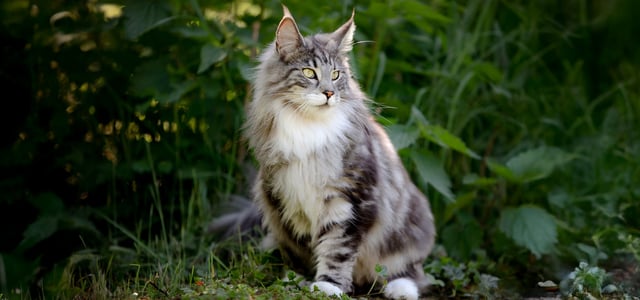
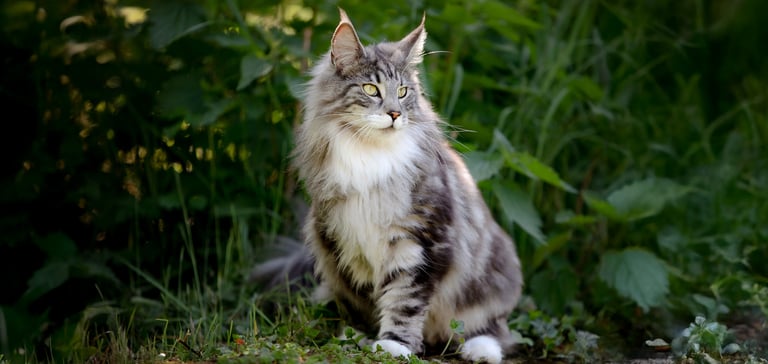
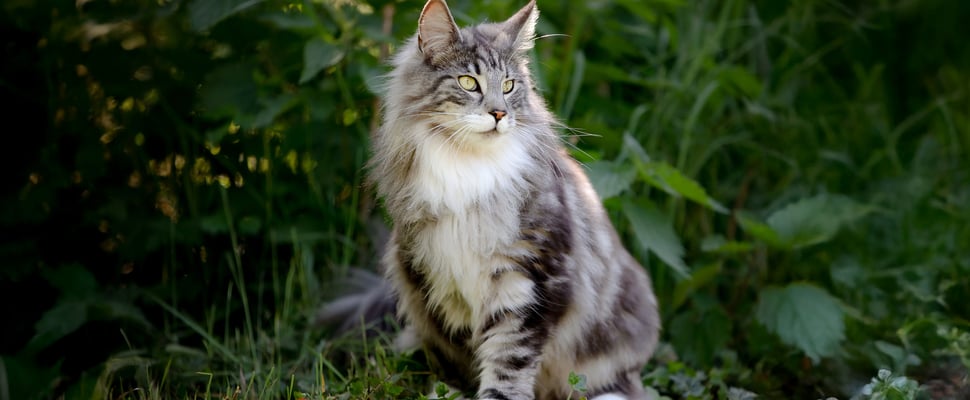
Spotting the differences starts with a close look:
So how do their sizes compare?
Maine Coons win the size game. Males can weigh 7-11 kg (although 11 is rare!), females 5-8 kg, stretching up to 1 metre long including the tail. They're built like small dogs, with sturdy bones and muscles.
Norwegian Forest Cats come close but stay slimmer. Males hit 6-9 kg, females 4-6 kg. Their bodies feel elegant yet strong, perfect for leaping.
Maine Coons and Norwegians are among the biggest domestic cats' largest breeds, but don't worry if your kitten looks small at first; It can take four to five years for them to reach their full adult size.
Here's a quick comparison table:
What about their coats and grooming needs?
Both have semi-long fur to beat the cold, but their textures differ.
Maine Coons sport a silky, uneven coat. It's shorter on the shoulders, longer on the belly and tail, with a fluffy ruff like a lion's mane. Groom them twice a week to avoid mats, especially in winter.
Norwegian Forest Cats have a woolly undercoat under glossy guard hairs, making it water-repellent and even-length. They shed heavily in spring, so brush often during that time.
Your cat will thank you for regular grooming. It keeps their coat shiny and cuts down on hairballs. Plus, it's bonding time.
Head and facial features: Spot the shape
Their heads tell them apart easily.
Maine Coons have a square muzzle and rectangular look, with a firm chin and high cheekbones. Their ears sit high, often with lynx tips, and their eyes are oval and expressive.
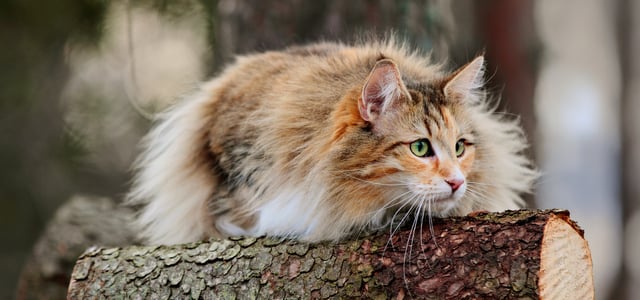
Norwegian Forest Cats show a triangular head, all sides equal, with a straight profile. Ears are large and tufted, eyes almond-shaped and alert.
For show standards, check the GCCF Maine Coon Standard of Points for that boxy vibe, and the GCCF Norwegian Forest Cat Standard of Points for the explanation of the wedge shape.
Temperament and personality
Personality seals the deal for many owners.
Maine Coons act like gentle giants. They're sociable, loyal, and love family life. Expect chirps and trills as they "talk" to you. They're great with kids and dogs, but need playtime to stay happy.
Norwegian Forest Cats are independent. Smart and friendly, they enjoy company on their terms, without being clingy. They might chirp too, but quieter overall. Perfect if you want a cat that chills solo sometimes.
Both get along in multi-pet homes. Just give them high perches because they love climbing. We know choosing feels tough, but think about your lifestyle. A chatty Maine Coon suits busy households, while a calm Norwegian fits quieter ones.
Health and lifespan
We all want our cats to stick around for a long time. Maine Coons live 10-15 years on average, often 12-13. Watch for hypertrophic cardiomyopathy (HCM), hip dysplasia, and spinal muscular atrophy. Regular vet visits catch these early.
Norwegian Forest Cats average 14-15 years, up to 20 with luck. They might face glycogen storage disease or kidney issues. But they're sturdy overall.
Feed high-quality food, keep them active, and spay/neuter for longer lives. In the UK, vets recommend annual check-ups. For more on Maine Coons, see our Maine Coon cat breed guide.
Owner experiences
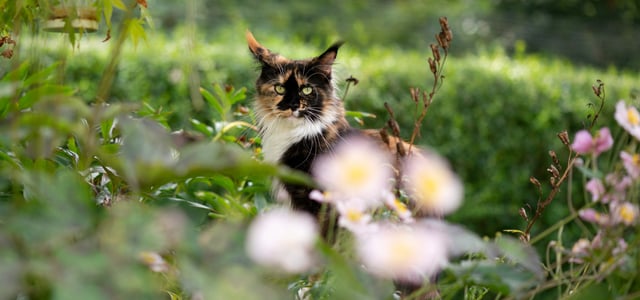
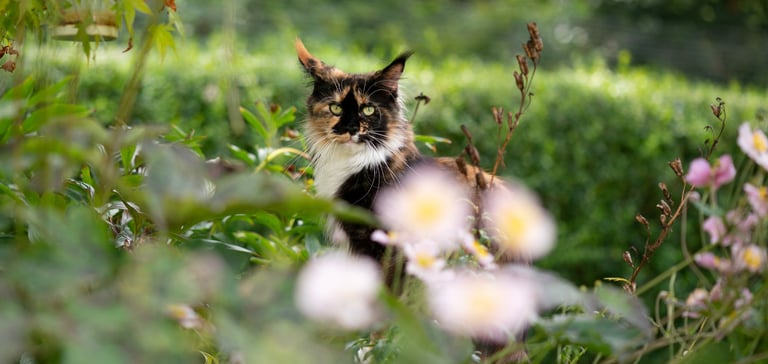
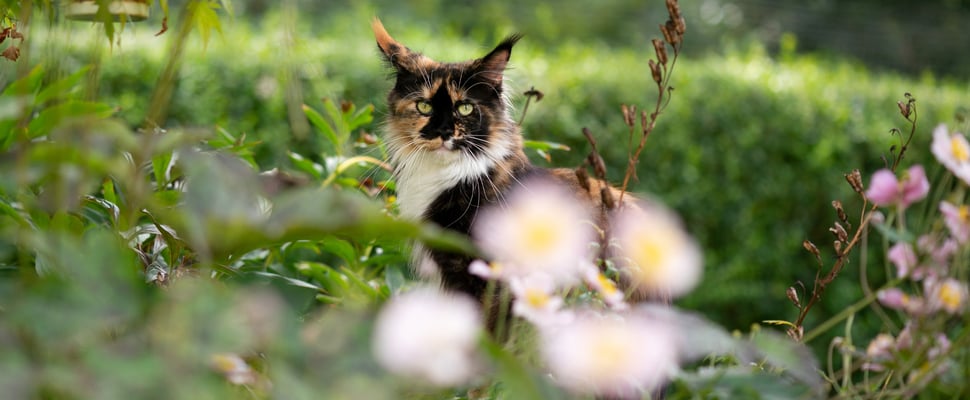
We pulled stories from Reddit forums where folks share the joys and quirks of life with these breeds. For example, one owner shared how their Maine Coon "helps" with laundry by jumping in the basket every time.
Seeing these everyday examples helps us to understand what living with these pets is like in real situations. Here are a few more examples:
Maine Coon tales
Owners often rave about their Maine Coons' dog-like loyalty. One said their cat follows them everywhere and even plays with the family dog. But watch out, they can be clingy and loud, making noise that fills the house.
Another laughed about how their Maine Coon loves water, leading to messy bath times. They're smart, too, getting into trouble by climbing everything in sight. Grooming is a must, with daily brushing to handle shedding, and a big litter box helps.
Many agree they're great for first-time owners who like affectionate, playful cats. Check out these stories on Reddit's Maine Coon community.
Norwegian Forest Cat stories
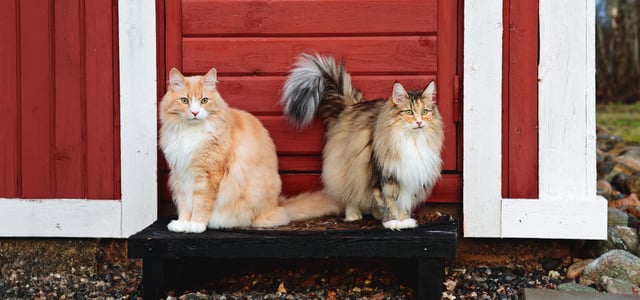
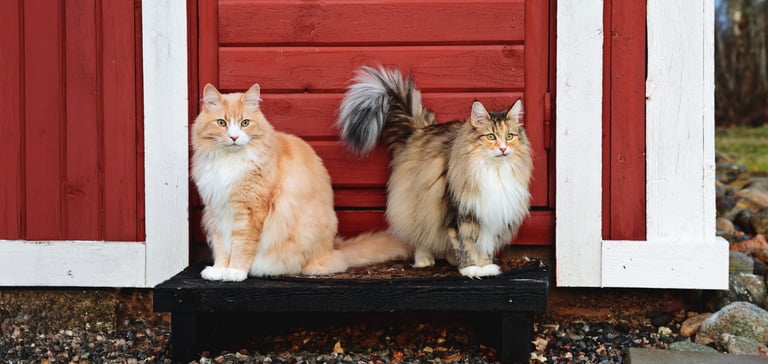
Norwegian Forest Cat owners describe them as gentle explorers. One shared how their cat 'talks' constantly, follows them around, and jumps into laps for cuddles. They're sociable yet independent, loving play without being vicious.
Adaptable to changes like moving house, they're friendly with everyone. Some note they grow big, almost dog-sized, and mixed breeds can be just as wonderful. Health-wise, they're sturdy, but owners advise checking for breed-specific issues. For more, peek at discussions in the Norwegian Forest Cats subreddit.
In comparison, owners say Maine Coons feel more outgoing, while Norwegians offer quiet companionship. Either way, both these cats steal hearts.
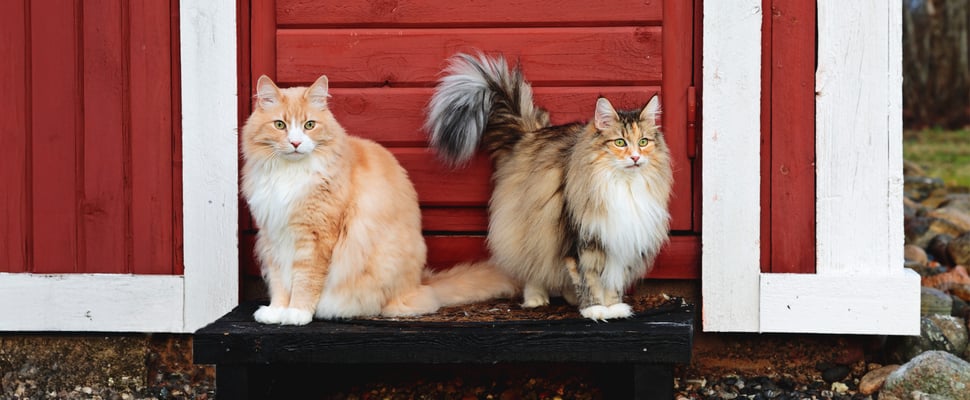
Which breed suits you best?
It ultimately boils down to what you need.
If you crave a big, outgoing cat that joins family fun, go for a Maine Coon. They're like a dog in cat form, full of personality.
Prefer a graceful explorer who's content watching from afar? The Norwegian Forest Cat fits, with less demand for constant attention.
Both bring joy and fluff to your home. Visit breeders, meet the cats, and see who clicks. Your perfect match awaits.
We hope this helps you decide. Whichever you choose, you'll have a loyal companion for years.

From everyday questions to expert advice, we’ll help you feel confident in every moment of pet parenthood.
Less stress, more love.
Along with our excellent coverage, we offer access to a 24/7 online vet to answer all your sticky questions.